Example: Quezon City’s Circularity Hub
| City role | Quezon City provides the site, staff coordination and policy mandate for the Textile Circularity Hub, positioning the initiative as part of its climate action, waste diversion, circular economy and inclusive livelihood agendas. |
| Funding and revenue | The city provides the physical space rent-free for an initial period, covers utilities and supports local staff coordination. Anthill Fabric Gallery brings the operational model and corporate client relationships that generate B2B sales. |
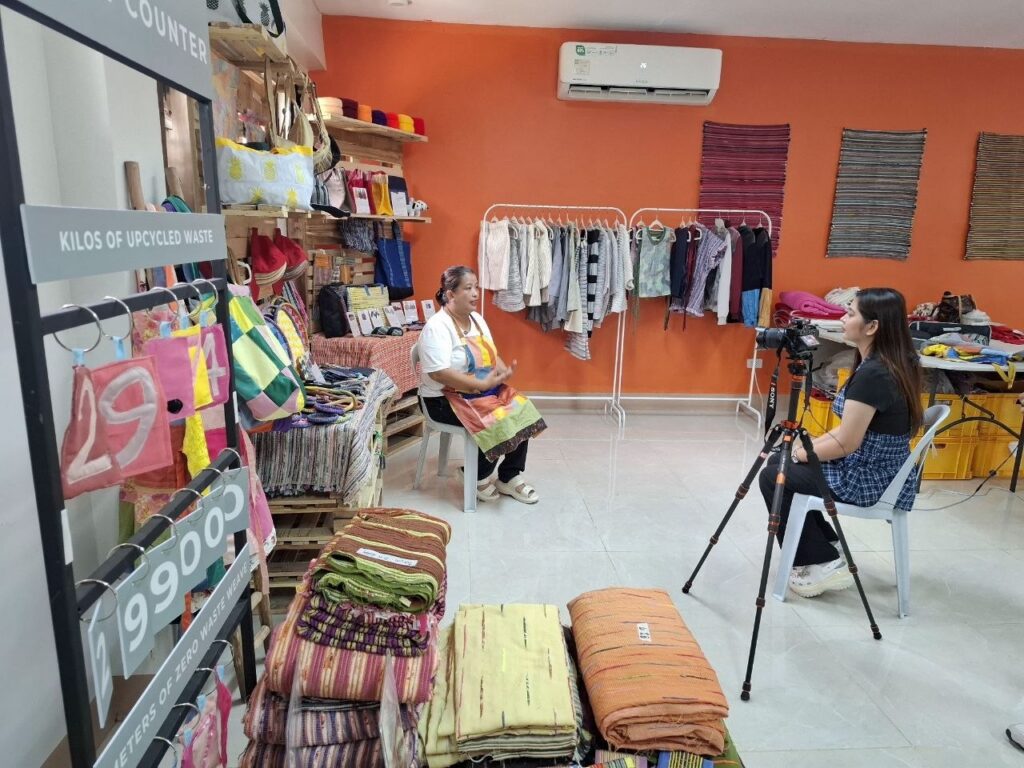
| Operating model | The hub operates mainly as a business-to-business circularity model: corporate textiles such as uniforms and aprons are upcycled into higher-value products that can be sold back to companies, while the public-facing store supports wider awareness and visitor engagement. |
| Scale and governance | The hub is formalised through a city ordinance and a memorandum of agreement. One city staff member is based at the hub daily, supported by wider circular economy and small business teams, with monthly meetings and KPIs covering sales, products sold and artisans employed. |
| Key partners | Quezon City Small Business and Cooperatives Development and Promotions Office, the Climate Change and Environmental Sustainability Department, Anthill Fabric Gallery, community artisans in Payatas, corporate textile donors and buyers, national government agencies, schools and local businesses. |
Introduction and context
Quezon City’s Textile Circularity Hub shows how a city can use circular economy action to support both climate goals and local livelihoods. Located in Payatas, a community historically associated with one of Metro Manila’s largest landfill sites, the hub turns textile waste into a resource for enterprise, skills and community income. It also contributes to the city’s wider climate targets: a 30% emissions reduction by 2030 against a business-as-usual scenario and diversion of at least 50% of waste away from landfill by 2030.
The model brings together the Quezon City local government unit, Anthill Fabric Gallery and private-sector textile streams. Anthill, a Cebu-based social enterprise with a long-standing zero-waste circularity programme, upcycles corporate uniforms and other textiles into new products, while the city uses the hub to link waste reduction with green jobs, public education and business participation.
How the partnership works
The partnership model combines city enabling support with Anthill’s technical and market expertise. The local government provides the physical space, utilities, staff coordination and policy mandate; Anthill uses the site for product display, training and weaving operations. This keeps the hub focused on public climate and livelihood objectives while allowing a specialist partner to operate the circularity model.
Formalising the city–social enterprise partnership
The partnership is supported by a city ordinance and a memorandum of agreement. A city staff member is based at the hub each day to coordinate with Anthill, while monthly meetings track KPIs such as sales, products sold and artisans employed. These arrangements help clarify responsibilities and keep the hub accountable to its wider public purpose.
Using a city asset to anchor circular economy delivery
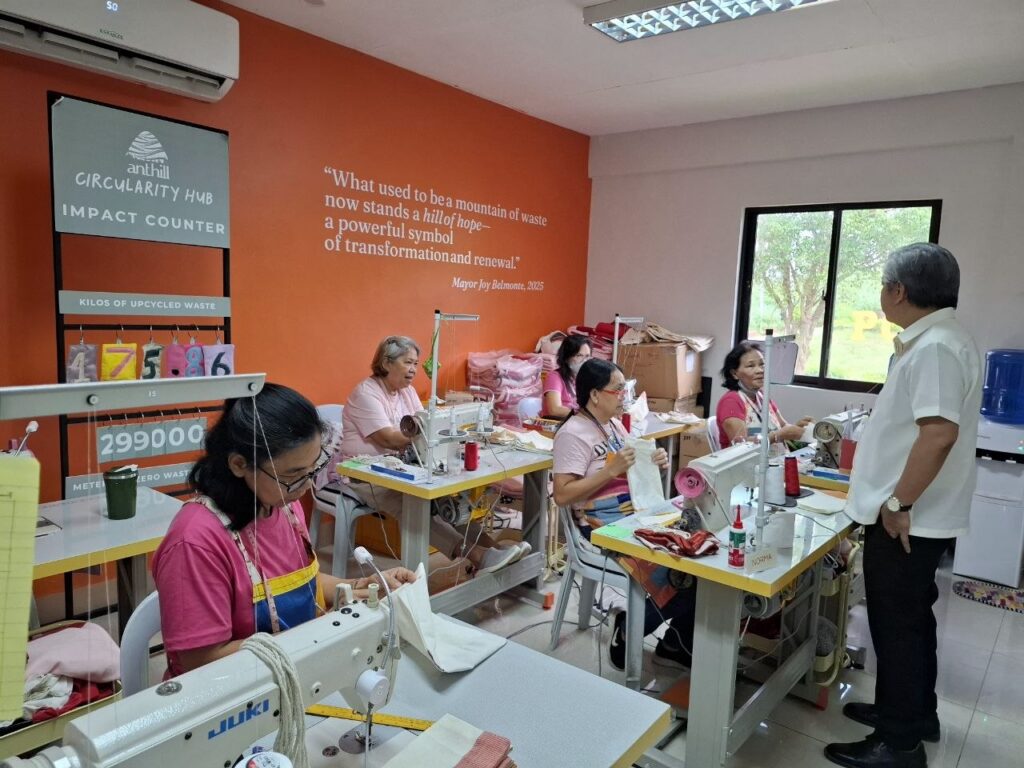
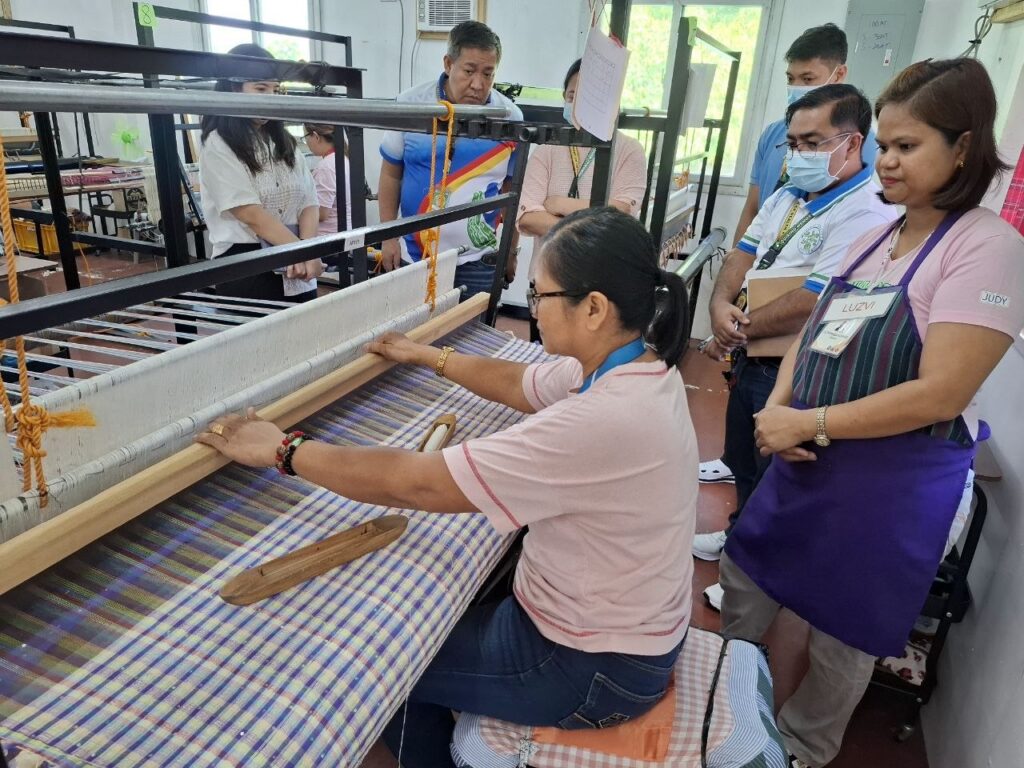
The hub’s location gives the initiative a strong place-based logic. By using land associated with the former Payatas Landfill, the city has turned a site linked to waste disposal into a centre for reuse, repair and circular production. A weaving centre built from upcycled container vans and equipped with around 10 large looms enables wider zero-waste textiles to be produced locally.
Turning textile waste into green livelihoods
The hub builds on existing community skills while shifting artisans into a higher-value market. During the pilot, around 20 women from the community were trained in weaving, sewing and sustainable textile techniques. The city then employed some of these community artisans as weavers and seamstresses.
Building public awareness and replication pathways
Quezon City also uses the hub to support wider advocacy and replication. Business orientations, school engagement and public campaigns link textile circularity to fast fashion and climate, while a recent textile ordinance provides for at least one hub per district and additional drop-off points for used textiles.