Example: Tshwane city-business partnerships
| City role | The City of Tshwane positions climate partnerships through its Integrated Development Plan and relevant climate, resilience, and adaptation priorities, matching city needs with the strategic interests, capabilities, and resources of business partners. |
| Funding and revenue | Partnerships are typically enabled through donations, co-funding, or in-kind support. The city does not operate a membership-fee model; instead, it contributes where possible through facilities, convening power, infrastructure, and access to existing business-support platforms. |
| Operating model | The city works through two complementary routes: strategic partnerships with larger companies on practical resilience and adaptation projects, and emerging engagement with SMMEs (small, medium, and micro enterprises) through awareness-raising, aftercare visits, procurement criteria, and business-support programmes. |
| Scale and governance | Partnerships are embedded institutionally rather than managed through a single department. They are formalised through memoranda of understanding and circulated across relevant city departments, helping connect climate priorities with economic development, infrastructure, investment, and service-delivery functions. Decision-making can require senior municipal approval, while Tshwane Economic Development Agency provides a more agile route for embedding climate considerations into SMME-facing programmes. |
| Key partners | Partners include large corporates in water, energy, insurance, automotive, and mining sectors, alongside SMMEs across seven sectors, city departments, Tshwane Economic Development Agency, NGOs, and development partners. |
Introduction and context
The City of Tshwane is developing a practical city-business climate partnership model that connects climate resilience, adaptation, economic development, and inward investment. Rather than operating through a single alliance structure, Tshwane’s approach combines strategic partnerships with larger companies and emerging work to embed climate action into support for small, medium, and micro enterprises (SMMEs).
The Tshwane Green Foundation provides an important wider platform for this work. Launched by the Capital City Business Chamber with the support of the Executive Mayor, the Foundation is intended to help mobilise business, government, and other partners around Tshwane’s transition to a greener, more climate-resilient city. The partnerships described in this case study sit within this broader direction: they show how the city is already working with private-sector partners, development partners, NGOs, and SMMEs to translate green-city ambitions into practical projects, investment opportunities, and business-support mechanisms.

How the partnerships work
Tshwane’s partnership model links the city’s formal climate and sustainability agenda with the business-led momentum represented by the Tshwane Green Foundation. The Foundation creates a broader platform for mobilising private-sector interest, resources, and practical support for sustainable urban development, while the partnerships described here show how this agenda is being applied through specific projects and business-engagement mechanisms. Climate partnerships are embedded institutionally rather than managed through a single department: bringing together relevant city functions, business partners, development partners, NGOs, and SMME-facing teams depending on the issue being addressed.
For larger companies, this often means formal partnerships around climate resilience and adaptation projects, such as:
- Coca-Cola: collaboration on a non-revenue water programme focused on reducing water losses and improving water-use efficiency;
- BMW: support for a biogas initiative designed to reduce reliance on grid electricity; and
- Insurers such as Old Mutual, Hollard, and Santam: partnerships to train community emergency response teams and strengthen local fire resilience while creating opportunities for unemployed young people.
For SMMEs, Tshwane’s focus is on embedding climate action into existing business-support channels, including aftercare, procurement, awareness-raising, and routine engagement led by Tshwane Economic Development Agency. This includes adding climate-related questions to onboarding and aftercare processes, asking companies how they manage waste and energy use, and using coaching conversations to introduce cleaner, more efficient ways of working. Framing climate action through practical business support helps present it as part of business development, rather than as a separate or additional agenda.
Aligning partnerships with city priorities and business interests
The city uses its Integrated Development Plan as a guiding framework, then considers the strategic priorities of potential business partners. This creates a basis for mutual value: water-intensive companies can support water resilience work, insurers can contribute to fire, flooding, and drought prevention, and automobile companies can engage around energy and renewable-energy challenges. Cooperation is then formalised through memoranda of understanding that involve the relevant city departments rather than sitting with one team in isolation.
Using strategic partnerships to deliver practical resilience projects
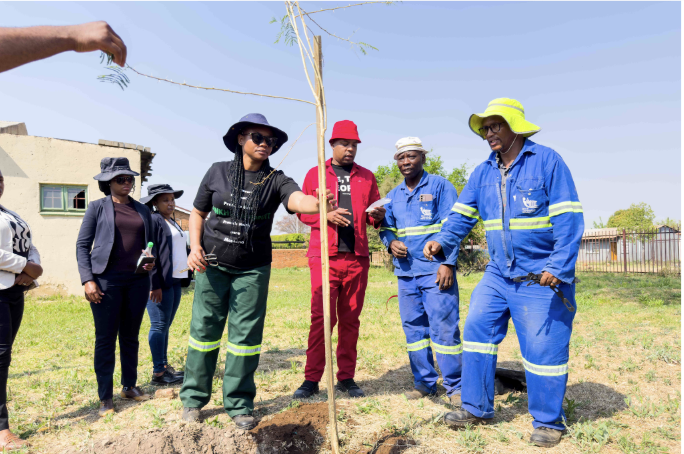
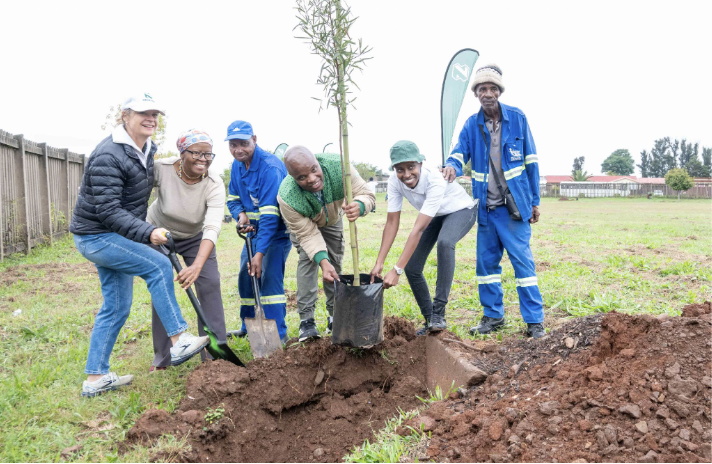
Examples of city-business collaboration include storm-water work in urban regions affected by flooding, tree planting and vegetation projects in heat-affected and dry areas, water-use and leak-reduction activity with corporate and development partners, support for BMW’s biogas facility, and fire-prevention and emergency-response training with insurance companies. These projects show how private-sector resources, technical capabilities, and risk interests can be connected to city resilience priorities.
Creating incentives through procurement and business platforms
Green procurement is emerging as an important lever. By asking suppliers to explain how they address specific environmental factors, and by awarding points for greener practices, the city can create a commercial incentive for businesses to understand and adopt climate-related measures. Existing platforms, such as awards, sector events, and SMME support programmes, also provide practical opportunities to introduce climate criteria without needing to create entirely new structures.